Too dry
- Sharp fret ends along the fingerboard edge
- Sunken top or visible cracks near seams
- Action that is lower than before, with fret buzz
- Open seams or a lifted bridge
- Loose or rattling parts

Wood absorbs moisture when the air is humid and releases it when the air is dry. The change in size is small but constant, and the thin, tensioned structures of musical instruments make it show up as cracks, buzzing, changed action and altered tone.
Seasonal change is the main cause. Heating in winter and air conditioning in summer both push indoor humidity away from where instruments are happiest.
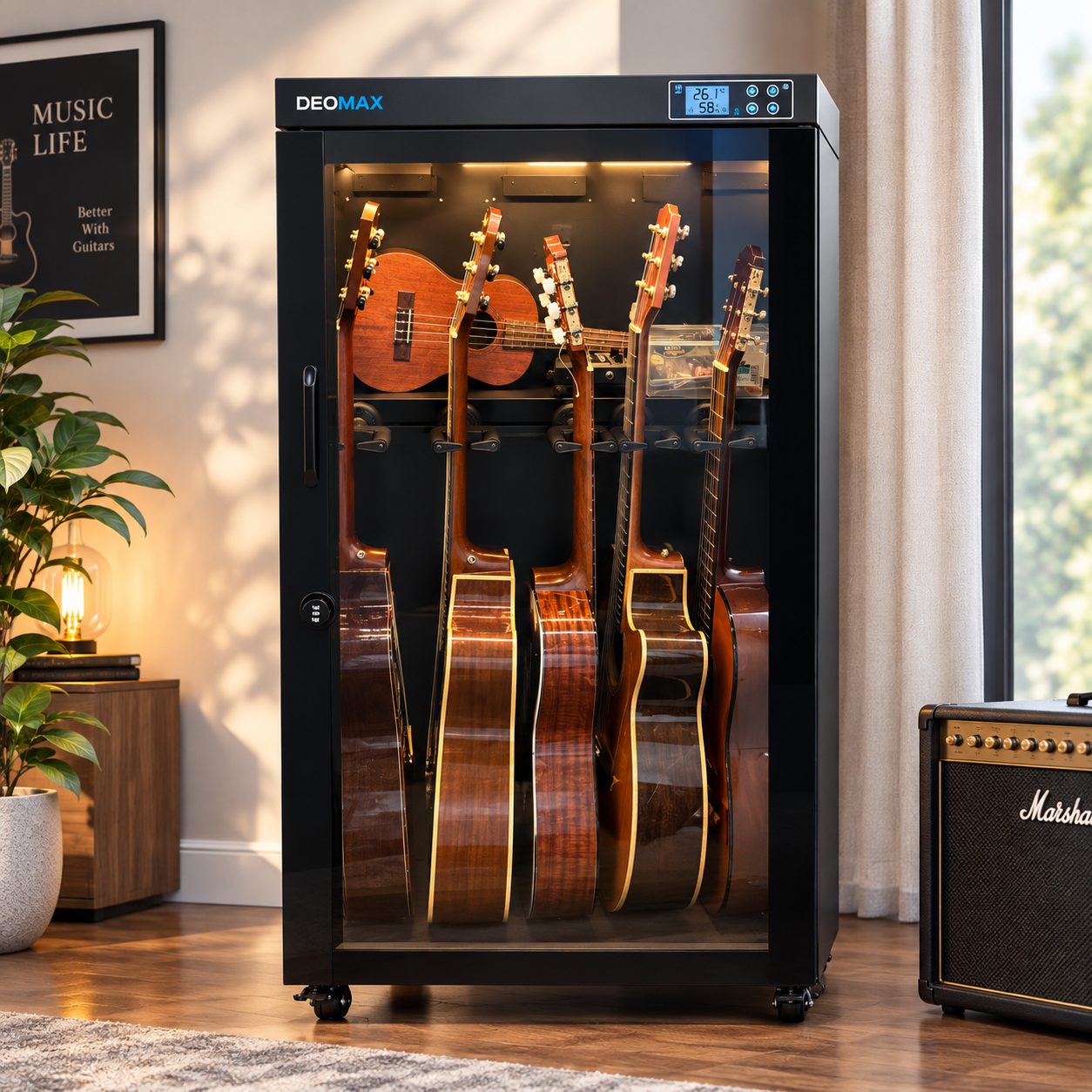
These are general guidelines widely used in the instrument trade. Always follow your instrument maker's advice, and ask them about regional or model-specific guidance.
| Item | Common target | Note |
|---|---|---|
| Acoustic & classical guitar | 40–55% RH | Thin solid tops react first; avoid extremes. |
| Electric guitar & bass | 40–55% RH | Necks, fretboards and finishes follow wood movement. |
| Violin, viola & cello | 40–60% RH (45–55% is common) | Seams and soundposts are sensitive to swings. |
| Pipa & other Chinese lutes | 40–60% RH | Thin soundboards and wooden frets. |
| Saxophone & woodwinds | 40–60% RH | Pads, corks and reeds respond to moisture. |
| Cameras & lenses | about 40–50% RH | Lower humidity discourages fungus on glass. |
Use a reliable hygrometer or the cabinet's display. Feel is not a measurement.
Move instruments gradually between very different environments and let them acclimate before opening the case.
Do not place instruments or cabinets near radiators, vents or windows with direct sunlight.
An instrument that is played daily can sit on a stand, but instruments that wait between sessions benefit from stable storage.
Check more often in the first cold snap and the first humid weeks.
When an instrument maker names a range, use it.
Tell us the instrument type, quantity, target humidity and destination market. We will reply with suitable models and OEM / ODM options.